NEW BLOG LOCATIONS

I've moved to another two blogs, one on writing, and one on general stuff like this one. Please come visit! MY NEW BLOGS:

http://amydeardon1.blogspot.com

http://thestorytemplate.blogspot.com


Wednesday, April 28, 2010

The Essence of Your Story


A common problem that occurs when writing a book or screenplay is that it loses focus. There are interesting subplots, and interesting side journeys, and after awhile it's hard to know what to pay attention to. Yes, ever since Tolkien published Lord of the Rings I know many writers want to do this sort of complex world-building, but frankly I haven't seen too many of these epics actually being published. Heck, even Peter Jackson found he had to cut A LOT of Tolkien's material in order to get a comprehensible story line -- and his movie masterpiece trilogy is still 9 + hours long.


It's worse if you're not even trying to branch your story out in 32,853,02 directions.


I'd like to propose a few easy questions for you to answer about your story, that should be able to focus you in to get your story started with minimal trauma. If you can answer these questions, you've got the spine of your story. For every event or character that you want to add, simply ask yourself if it's consistent with what you've already laid out here. If it is, go for it. If not, get rid of it. This includes things like subplots: the subplot should either be adding a component that is necessary for the story usually at the finish, or following a mirror character where the character wants the same thing as the protagonist, but answers the question in a different way. I have more details in my article on subplots HERE.


Ready? Here are a few questions to help you get at the essence of your story:


1. Who is your MAIN CHARACTER?


2. What external problem does your main character want to solve in the story? This is his OUTER GOAL. For example, he may want to win the big football game, or make a million dollars, or find a girlfriend.


3. Who or what is the chief OBSTACLE to your protagonist's achieving his outer goal?


4. What horrible things will happen if the protagonist cannot achieve his outer goal? This is the STAKES of your story.


5. What is your main character's HIDDEN NEED? This is a lack within your main character that he must solve before he can be happy. For example, he may need to forgive someone, or he may need to become courageous, or he may need to learn not to be selfish.


5. In one sentence, describe what your story is about.


These questions may be easy, or may take some thought. If you're having trouble, simply list, say, 10 or 20 stupid answers to the question. Then just pick one of these answers and see if you can fit it in; if you can't, choose another. Free-write your ideas so that you can tell a quick outline of your story in a paragraph or so. Figure out the captivating kernel of your story, whether character, plot twist, or something else. I have a small tutorial on my website HERE that writers have found helpful to organize their ideas.


Once you've got the basic direction of your story, you'll find it's much easier to start planning or writing (if you're an SOTPer -- a seat-of-the-pants writer).

Monday, April 26, 2010

Church Life


Church bulletins aren't read as much as they used to be. Still, they can offer some amusing insights describing the life of the church:


The Fasting & Prayer Conference includes meals.


The sermon this morning: "Jesus Walks on the Water." The sermon tonight: "Searching for Jesus."


Ladies, don't forget the rummage sale. It's a chance to get rid of those things not worth keeping around the house. Bring your husbands.


Remember in prayer the many who are sick in our community. Smile at someone who is hard to love. Say "Hell" to someone who doesn't care much about you.


Don't let worry kill you off -- let the Church help.


Miss Charlene Mason sang "I will not pass this way again," giving obvious pleasure to the congregation.


For those of you who have children and don't know it, we have a nursery downstairs.


Next Thursday there will be tryouts for the choir. They need all the help they can get.


Irving Benson and Jessie Carter were married on October 24th in the church. So ends a friendship that began in their school days.


At the evening service tonight, the sermon topic will be "What is Hell?" Come early and listen to our choir practice.


Eight new choir robes are currently needed due to the addition of several new members and to the deterioration of some older ones.


Please place your donation in the envelope along with the deceased person you want remembered.


The church will host an evening of fine dining, super entertainment and gracious hostility.


Potluck supper Sunday at 5:00 PM -- prayer and medication to follow.


The ladies of the Church have cast off clothing of every kind. They may be seen in the basement on Friday afternoon.


This evening at 7 PM there will be a hymn singing in the park across from the Church. Bring a blanket and come prepared to sin.


Ladies Bible Study will be held Thursday morning at 10 AM. All ladies are invited to lunch in the Fellowship Hall after the B.S. is done.


The pastor would appreciate it if the ladies of the Congregation would lend him their electric girdles for the pancake breakfast next Sunday.


Low Self-Esteem Support Group will meet Thursday at 7 PM. Please use the back door.


The eight-graders will be presenting Shakespeare's Hamlet in the Church basement Friday at 7 PM. The congregation is invited to attend this tragedy.


Weight Watchers will meet at 7 PM at the First Presbyterian Church. Please use large double door at the side entrance.


Wednesday, April 21, 2010

Randy's Thoughts on Getting the Words Down

Randy Ingermanson is my hero. Really. I've thought of all the people I know, and his career as a writer and analyst of writing seems the closest to what I want to do with my life. He's also a darn nice person. I don't know if I will ever approach what he does, but at least he's a good role model.


Randy is the inventor of the Snowflake technique for writing novels. This is a worthy (and free!) system to at least give a whirl to. He's also the author of Writing Fiction for Dummies.


I found this article in his most recent e-zine, and thought it was optimistic and might actually work! I plan to start, as soon as my stupid computer is back online. (I'm having trouble installing a driver to allow me to connect to the internet. Grrr). Have you ever tried something like this? Did it work?


*


Organizing: Small Chunks


I don't know any writers who can write a whole novel in one sitting. For most novelists, it takes weeks, months, or years to write a novel. They'll tell you that you write a novel (and later you edit it) one chunk at a time.


What's a "chunk?"


The answer to that is different for different novelists. Many writers work one scene at a time or even one page at a time. But it's easy to get bogged down on that scene or that page and waste insane amounts of time.


Time is precious, and all other things being equal, you'd like to write your novel as quickly as possible.


I've been studying up on personal productivity lately, and one technique I've found very helpful is to set aside a block of time dedicated solely to whatever I'm working on. During that time, I focus entirely on what I doing. I don't check e-mail. I don't answer the phone. I'm surly to the cat.


When the time's up, I take a break. During the break, I can check e-mail, listen to voice mail, or pet the cat.


I learned this technique from a productivity guru named Eben Pagan. Eben has a particular formula for it. He recommends that you work in blocks of 50 minutes, and then take a 10 minute break. During the 10 minutes, your goal is to detach completely from your work. Since

writing is mainly intellectual work, during your break you might want to do something physical (like taking a walk) or you might want to do something that connects you emotionally with others (like talking to a friend or getting on Facebook).


That's it: 50 minutes of intense work, then 10 minutes to take a break. Then go do it again.


The reason this works is that you have a limit to how long you can work without losing focus. Different people are different, but typically it's about an hour.


Your goal is to work productively AND to have fun. During each 50 minute work period, set a goal for what you intend to get done. If you're writing a scene, you might shoot for writing three pages. That might not sound like much, but if you write that much in 50 minutes, it works out to 900 words per hour, which is a pretty good clip. If you're a fast writer, your goal might be higher. If you're a slow writer, it might be slower. The point is to set the goal at a point that you can only hit if you're really focused.


Let's do the math for a minute. If you write only one 50 minute chunk per day, five days per week, and if you get in three good pages during that chunk, you'll write a full-length novel of 90,000 words in 24 weeks. That's only five and a half months.


If you worked 2 of those small chunks per day, you'd get that novel done in 12 weeks.


3 of those focused chunks per day would get you finished in 8 weeks.


Is that actually possible in real life?


You bet it's possible. I've written several of my novels in less than two months each. I know a fair

number of published authors who routinely write the first draft of a novel that fast or faster. Some of them can write a full novel in less than a month.


Writing the first draft is just the first step, of course. After that, you need to edit your work.

Depending on how rough your first draft is, editing might take you days or it might take you months. You edit your work the same way you write your first draft -- in small chunks. 50 minutes on; 10 minutes off.


Now let's get down to the practical details. How do you know when the time's up without checking the clock every two minutes and . . . losing focus? 


The answer is very simple: Use a timer.


You can buy a kitchen timer for $10 to $15. Or you can get a software utility to do it. I use a simple Mac shareware program with the incredibly sexy name "Timer Utility" (by JR Productions) which I found on the Web site http://www.VersionTracker.com. You can set it for any length of time, click the Start button, and it beeps when the time is up.


The reason to use a timer is simple: Now you can relax and work hard without having to watch the clock. The timer will tell you when to stop. No worries. Just work hard. Work focused. A timer gives you the freedom to do that.


This idea may seem to you so absurdly simple that it can't possibly work. Do yourself a favor. Try it for just one day and see how much you can get done in a 50 minute chunk.


You might just surprise yourself.


*


Award-winning novelist Randy Ingermanson, "the Snowflake Guy," publishes the Advanced Fiction Writing E-zine, with more than 20,000 readers, every month. If you want to learn the craft and marketing of fiction, AND make your writing more valuable to editors, AND have FUN doing it, visit http://www.AdvancedFictionWriting.com.


Download your free Special Report on Tiger Marketing and get a free 5-Day Course in How To Publish a Novel.


Monday, April 19, 2010

Tension in Writing the Individual Scene


There are both plot-driven and character-driven stories, but in my humble opinion they both need tension in order to move forward. Tension must be in every chapter, every paragraph, every sentence. Tension is the uncertainty of at least one issue in the story. For example, here is a conversation between character A and character B:

A: Do you like eggs for breakfast?
B: (answer #1) Yes.
B: (answer #2) My mom used to make eggs, soft boiled, you know, and she'd break them over toast so that the egg yolk would soak in.
B: (answer #3) Why is it any of your business?

Answer #1 stops the conversation, and the story. There are times when this answer might be appropriate -- say, to establish an abrupt interchange -- but in general, #2 or #3 might be a better choice. #2 opens up a chance to deepen character background in a natural way, and #3 suggests a brewing fight. My general rule for questions in writing, whether spoken or implied, is *never* to put down a direct answer.

When I write, I like to plan out the broad outlines of a chapter before I start in. I often end up changing it, mind you, but I at least start with a direction.

According to
Jack Bickham there are two units of story construction: a SCENE and a SEQUEL. Very roughly speaking, the scene follows the advancing plot, and the sequel describes the POV character's reaction to it. Bickham describes that all stories are beads of Scene-Sequel-Scene-Sequel, although many times the sequel can be pulled to speed up the action.

While I don't agree with everything he describes, his thoughts were quite helpful, and allowed me to develop a technique for planning each chapter. Here's my technique, for what it's worth:

At the top of the page, I'll copy in my little outline:

POV:
GOAL:
CONFLICT:
DISASTER:

POV stands for the point of view character, in whose head I am writing from. Hmm, maybe I should write a blog on character viewpoint. Basically, since I prefer the 3rd person limited, everything is told from that character's perspective: what HE can see, what HE knows.

GOAL: what is the short-term goal that my POV character is trying to achieve within the next few pages? When writing the draft, I try to have the character actually state his goal clearly close to the beginning of the scene.

CONFLICT: what obstacles will stand in the way of this goal? Obstacles can be both EXTERNAL (other people, physical obstacles) and INTERNAL (fears, worries, lack of knowledge). I like to come up with at least 5 conflicts. Even though I can't always come up with 5, and even if I do come up with them I don't always incorporate them into the draft, they are still helpful to prevent writers block -- if I'm stuck I can always throw another problem at my poor POV character.

DISASTER: the scene should not end happily. Even if the POV character is successful with his goal at the beginning of the chapter, he should be in a worse situation at the end of the chapter. More questions are raised! The reader thinks, I'll read just one more chapter...

*

I also use sequels, the emotional reaction of the POV character, although often find that I can use an abbreviated form before starting the next scene or after finishing the last scene. When I'm ready to write a sequel, I post this outline at the top:

EMOTION:
THOUGHT:
DECISION:
ACTION:

EMOTION: refers to the POV character's emotional state immediately following the previous scene. Is he frightened, worried, angry, desperate?

THOUGHT: once he's had some emotion, he's able to logically evaluate the circumstances.

DECISION: the character is in a bad situation, and must decide what he is going to do.

ACTION: He begins to do what he decided.

*

There is no easy way to write, but doing this little bit of preplanning at least for me is quite helpful to prevent writers block. Often my scene shapes up differently than what I'd thought, but that's OK too -- I go with the flow.

So, how do YOU go about facing the computer screen every day?

Friday, April 16, 2010

Tax Day 2010

April 15th seems like a jinxed day:


Abraham Lincoln died on this day in 1865 after being shot on Good Friday the night before by John Wilkes Booth. It was just 6 days after General Robert E. Lee had surrendered at Appomattox. One wonders how our country's reconciliation between North and South might have gone differently if Lincoln instead of Andrew Johnson had overseen Reconstruction: Johnson weakened the fragile union by encouraging Southern rebels, denying freed slaves any rights, and breaking rich men to redistribute wealth.


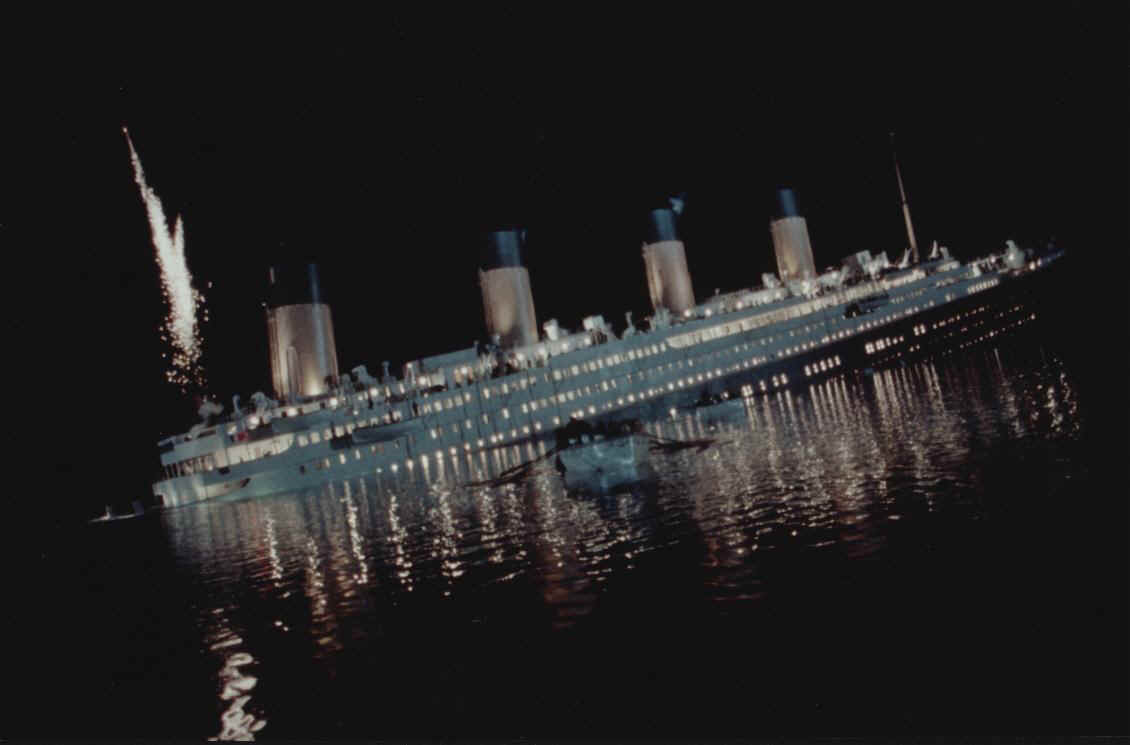
The Titanic sank early in the morning on this day in 1912 after hitting an iceberg in the North Atlantic Ocean while steaming from Southampton England to New York City. 1517 people were lost; the Titanic carried a lifeboat capacity of less than half of its total 2223 persons on board. Only 706 people, 31.8% of the total, survived. Titanic was the most modern and luxurious ship built at the time, and was thought to be unsinkable.


And of course, April 15th is tax day. OK, I won't go there.

*

No, I'm not superstitious, and I remain full of hope even on this dark day.

Wednesday, April 14, 2010

Tax Day Tomorrow


To celebrate the activity of many Americans today, culminating in the deadline tomorrow, I'd like to humbly offer this bit of *lightheartedness* (?).


Tax his land,   
Tax his bed,   
Tax the table, 
At which he's fed.

Tax his tractor, 
  
Tax his mule,   
Teach him taxes   
Are the rule. 


Tax his work,
Tax his pay,
He works for peanuts
Anyway!

Tax his cow,
Tax his goat,
Tax his pants,
Tax his coat.
 

Tax his ties,
Tax his shirt,
Tax his work,
Tax his dirt.
 

Tax his tobacco,
Tax his drink,
Tax him if he
Tries to think..
 

Tax his cigars,
Tax his beers,
If he cries
Tax his tears.
 

Tax his car,
Tax his gas,
Find other ways
To tax his --.


Tax all he has
 
Then let him know
That you won't be done
Till he has no dough.
 

When he screams and hollers;
Then tax him some more,
Tax him till
He's good and sore.


Then tax his coffin,
Tax his grave,
Tax the sod in
Which he's laid...

Put these words
Upon his tomb,
Taxes drove me
to my doom...'

When he's gone,
Do not relax,
Its time to apply
The 
inheritance tax..  

   
Accounts Receivable Tax
Building Permit Tax
CDL license Tax
Cigarette Tax
Corporate Income Tax
Dog License Tax
Excise Taxes
Federal Income Tax
Federal Unemployment Tax (FUTA)
Fishing License Tax
Food License Tax
Fuel Permit Tax
Gasoline Tax 
(currently 44.75 cents per gallon)
Gross Receipts Tax
Hunting License Tax
Inheritance Tax
Inventory Tax
IRS Interest Charges 
IRS Penalties 
(tax on top of tax)
Liquor Tax
Luxury Taxes
Marriage License Tax
Medicare Tax
Personal Property Tax
Property Tax
Real Estate Tax
Service
 Charge Tax
Social Security Tax
Road Usage Tax
Recreational Vehicle Tax
Sales Tax
School 
Tax
State Income Tax

State Unemployment Tax (SUTA)
Telephone 
Federal Excise Tax
Telephone Federal 
Universal Service Fee Tax
Telephone Federal, State and Local Surcharge Taxes
Telephone Minimum Usage Surcharge Tax
Telephone Recurring and Nonrecurring Charges Tax
Telephone   State  and Local Tax
Telephone Usage Charge Tax
Utility Taxes
Vehicle License Registration Tax
Vehicle Sales Tax
Watercraft Registration Tax
Well Permit Tax
Workers Compensation Tax


STILL THINK THIS IS FUNNY? Not one of these taxes existed 100 years ago, & our nation was the most prosperous in the world.  We had absolutely no national debt, had the largest middle class in the world, and Mom stayed home to raise the kids.

What ihappened? Can you spell 'politicians?'

Monday, April 12, 2010

Computer Virus

Honestly, I don't understand why people write virus programs -- they are JUST NOT FUNNY! As a kid I never put salt in the sugar shaker. I don't switch signs on nonfunctioning elevators. Why can't other people show the same courtesy?

Despite what I thought was being careful with my computer habits, including care where I visited/downloaded on the web and frequent checks with an antivirus/malware program, my beloved computer has sunk low into the dust. I have about 8.7 GB of files (music, photos, and my writing files) and another 9 GB of programs. I also have some (comment deleted) program that keeps filling the remaining space on my 50 GB hard drive so that it slows and eventually doesn't work. Despite my best interventions, including removing 5 GB of photos (which the (comment deleted) program promptly ate), restoring the system, defragging the disk, cleaning the disk, and running other spyware and malware programs, nothing helped. 

UPDATE: after doing some google searches and running antivirus/malicious ware programs, I suspect that I may have a corrupted file or system that replicates instead of a virus or worm. I'm continuing to investigate the problem.

I have a great writers' loop that posted some free antivirus programs that might be helpful. I was assured by the writers that they used them without problems on their own computers, but as always, the final decision to download and use is yours:


for Avast the writer said "I have used with no infections for the last 6 years... I've used Norton, McAfee, and others, and have not been as satisfied as with Avast. It comes as free or pro, but I've only used the free version."


*


The good news is that a few months ago I started using Mozy, an online backup system that I thought was overkill but now I am at peace even though it looks like I may have to wipe the hard drive and reload the operating system. My files are all backed up. 

You never think it's going to happen to you, do you? My friends, whether you use Mozy or another system, BACK UP YOUR FILES!!!