NEW BLOG LOCATIONS

I've moved to another two blogs, one on writing, and one on general stuff like this one. Please come visit! MY NEW BLOGS:

http://amydeardon1.blogspot.com

http://thestorytemplate.blogspot.com


Showing posts with label traditional publishing. Show all posts

Tuesday, March 3, 2009

Submissions for Traditional Publishers: The Query Letter

A query letter is sent to the editor(s) or agent(s) of interest. You might write to the person cold, after a recommendation (say from a client of the agent's), or an invitation (say from a writer's conference). The first step is to research on the web to determine what, exactly, the editor or agent wants to receive. Some want to receive just a query. Some want to receive a query as well as a short synopsis and/or a few pages of the manuscript. Some want an email query, others snail mail, or they might not care. DO WHAT THEY TELL YOU TO. It's tempting to think gee, my book is SO good I just have to let them know more. No, you don't. Believe me, these people are overwhelmed with submissions, and won't thank you for adding to their work or recycle bin. (If all they want is a query, you probably need some rocket fuel recommendations, experience, and/or platform for them to consider you, although it doesn't hurt to try). If guidelines are unclear, I'd include a one page synopsis and possibly the first chapter of the manuscript.

Don't forget also to make it easy for the agent/editor to respond to you if they want more. Include your email, snail mail, and telephone numbers. If you're mailing by snail mail, include a self-addressed stamped envelope so they just have to scribble *yes* on your query and pop it in the mail. If you emailed your query, make sure that hitting reply won't cause the email to bounce, or cause the agent/editor to go through machinations (prove that they're a real person) in order for the email to reach you. DON'T call the agent/editor to pitch a story. They don't appreciate being interrupted.

The purpose of the query letter is to hook the interest of your prospect. The temptation is to put in a lot of information, but you should instead make your query short and intriguing.

Think of it this way: suppose you've just met someone and need to chit-chat for a few minutes. Do you want the other person to start telling you his life's story? Or is it more interesting for you if that person throws out an interesting tidbit and waits for you to ask a question (or not).

Query letters have four general parts:

1. introduction -- why are you writing to this particular person? Target your reason.

2. intrigue -- tell a little about the story, enough to raise curiosity without killing it.

3. justify -- what is your background that makes you qualified to write AND SELL this story?

4. close -- state specifically the action the person can take if he is interested.

The query should be only one page, period.

There is a terrific free resource entitled How to Write a Great Query Letter by literary agent Noah Lukeman HERE that you should download and study. Also, again, there is much information about how and where to send queries -- there is a nice series every year in the Writer's Digest Market HERE.

Needless to say, make sure this query is as polished as you can make it. The competition is fierce. You may have to send out 30 or more queries before you get a nibble, so put on your emotional armor before you start the process. This is the biz.

Here is an example of a query I just wrote Lever, for whatever my effort might be worth (a chuckle, anyway).

*

Dear Mr. Agent:

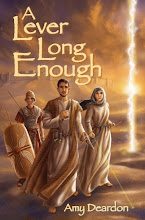
I'm writing to you because you represent so-and-so writer, whose work I love and feel is similar to mine. I was impressed to learn that you'd sold his latest work, Running Down the Drainpipe, to Bigshot Publishers. I like to think of my own novel as The Case for Christ meets The DaVinci Code. A Lever Long Enough is an adventure with a touch of science fiction, and is 92,000 words. It is suitable for ages 14 through adult.

The story: A Lever Long Enough is about a small military team that travels back in time to film the theft of Jesus' body from the tomb. I've enclosed a one page synopsis.

I am a scientist and skeptic who came to faith through study of the historic circumstances surrounding the death of Jesus. This is my first novel. Currently I am writing the prequel, entitled Nest Among the Stars, that follows a shock-and-awe space station disaster and involves the time machine in an unexpected way, and I also plan a sequel. Randy Ingermanson (City of God trilogy) and Wayne Batson (The Door Within trilogy) have both written an endorsement for this book. I have a blog with a following of approximately X hits per week, and a speaking platform where I present The Story Template, an algorithm I've developed for story construction. I am willing to work hard to market my works.

While the emphasis is on the story, Lever fairly presents the arguments for and against the resurrection, and demonstrates (without the use of any fictional miracles) that the case for the resurrection is remarkable. It is highly Messianic, a targeted marketing group. The synopsis and/or complete manuscript are available upon request. I have enclosed a one page synopsis and SASE for your convenience; email is also fine. I look forward to hearing from you.

Sincerely,

*

The one page synopsis would include the following text:

In the near future, the Israeli military has developed a prototypic time machine. When believers in Yeshua (Jesus) create a politically explosive situation that threatens the balance of peace between Israel and nearby countries, the Israelis must send a team of four elite soldiers back to film the theft of Jesus’ body from the tomb and thus disprove Christianity. The team, consisting of a Special Forces soldier as leader, an ex-American astronaut as engineering specialist, an archaeologist, and a linguist, has exactly seventy-two hours to collect the video evidence. Drawn into a web of first century deception and death, the only way to escape is for the team to change the past. In the present, a traitor attempts to sabotage the mission and seize control of the military complex. The Special Forces leader operating in the past is the only one who can reveal him, but he is trapped two thousand years away. Even with a time machine, time is running out...

I would probably paste in Randy's and Wayne's endorsements as well:

“Who wouldn’t want to time-travel back to first century Jerusalem to see if the Resurrection really happened? Amy Deardon has given me the next best thing with her novel bringing old Jerusalem to life. I raced through the book at lighspeed and enjoyed it immensely. Strong characters and an unpredictable plot made this a book I’ll want to read again.”

—Randy Ingermanson, Christy Award-Winning Author of Transgression and Oxygen

“If you could go back to Christ’s crucifixion, would you do it? What if the only way you could was by time-traveling with skeptics bent on proving Christianity is based on a lie? Author Amy Deardon tackles these provocative questions in her phenomenal debut novel: A Lever Long Enough. Readers will find themselves enveloped in the scope and import of this adventurous tale where love, loyalty, and faith will be tested in the crucible of first century Jerusalem.”
—Wayne Thomas Batson, Bestselling author of The Door Within trilogy, Isle Of Swords, and Isle Of Fire

*

NOTE: my first attempt at this letter has way too much information in it! It needs a lot of work.

Here is a sample query from Preditors and Editors:

What if the President of the United States committed a murder in front of you? What if you were a member of his Secret Service protection? Would you arrest him? Would you report the crime? Or would you cover up the crime to protect the nation because of an international crisis?

These are the questions Shari Nichols must resolve in my novel, All Fall Down. At the moment of the murder she professes allegiance to President Halverson, but she questions whether she has made the right choice. A quick promotion puts her into a job that consumes her attention and seems to support the President's action of murder. But within weeks a series of events makes Shari wonder if the President is as honorable as he seems. Shari Nichols digs for the truth and unearths secrets woven deeply within the infrastructure of the government. Secrets that touch even her family, but she may be digging her own grave.

The completed manuscript is available upon request. A SASE is included for your convenience. Thank you for your generous time. I look forward to hearing from you soon.

Cordially,

*

Queries are tougher than they look! Make sure you make yours shine.

Thursday, February 26, 2009

Submissions for Traditional Publishers: Getting the Material Ready

Let's assume you've finished your manuscript, and you are going to try for a literary agent (or editor). What do you need to do? Again, I'm just giving a quick overview of information that is widely available -- you'll need to do more research beyond this blog to actually produce an exceptional submission effort.

I like to think of the submission process as a two-pronged approach: you need to figure out WHAT you are going to prepare, and WHO you are going to give it to. Today, let's start on WHAT you are going to prepare.

*

Writers often spend months or even years writing a novel, and next to no time preparing materials to find a home for it. This is a big mistake -- a poorly compiled presentation will doom your manuscript to failure, even if you've written the next Gone with the Wind. Take some time to craft an exceptional submission package.

Before you start preparing your submission package, you need to sit back, take a deep breath, and figure out what you already have. I am going to assume for this blog entry that you've whupped your manuscript into the best shape it can be. This means that you didn't just type *The End* last week -- you've taken some time to edit, cut, reshape, and clarify your prose. This step is critical!!!

Now, for preparing to send it out. First question: what genre is your manuscript? Some genres are romance, adventure, mystery, suspense, and so forth. Some more questions: what are similar works to what you've done? What are some unusual characteristics of your story?

For example, Lever's genre is SF/adventure. A similar series is Randy Ingermanson's City of God series: Transgression, Premonition, and Retribution. Lever has time travel and a Messianic theme (since it explores the first century roots of Christianity and Jesus' life from a Jewish perspective).

How long is your manuscript? Is this length appropriate for your genre? Many publishers especially of romances give strict word limits, and all genres have *typical* word ranges. For example, YA and romance novels might be about 50,000 words, other genres might be longer. A manuscript over 100,000 words can be a serious strike against you no matter what the genre; try to pare it down to about 80,000 - 90,000 words if you can.

For example, Lever is about 92,000 words (rounded to the nearest thousand).

Next, if you haven't already come up with these, you need to write a 15-25 word zinger (see my website HERE for some tips), a short tagline, and a one paragraph summary. Here are mine:

Zinger: A small military team travels back in time to film the theft of Jesus' body from the tomb

Tagline: The Case for Christ meets The DaVinci Code

One Paragraph Summary:

In the near future, the Israeli military has developed a prototypic time machine. When believers in Yeshua (Jesus) create a politically explosive situation that threatens the balance of peace between Israel and nearby countries, the Israelis must send a team of four elite soldiers back to film the theft of Jesus’ body from the tomb and thus disprove Christianity. The team, consisting of a Special Forces soldier as leader (Benjamin), an ex-American astronaut as engineering specialist (Sara), an archaeologist, and a linguist, has exactly seventy-two hours to collect the video evidence. Drawn into a web of first century deception and death, the only way to escape is for the team to change the past. In the present, a traitor, Gideon, attempts to sabotage the mission and seize control of the military complex. Benjamin is the only one who can reveal him, but he is trapped two thousand years away. Even with a time machine, time is running out…

*

You'll need to write the following documents for your submission package:

1. Query Letter

2. One Sheet

3. 1 Page Synopsis

4. 3 Page Synopsis

5. highly polished first 3 chapters or first 25 pages of the manuscript, correctly formatted

6. Book Proposal, including marketing plan

*

OK, I'm going to sign off here today, and I'll pick up with query letters next. In the meantime, let me point you to a few resources that you may want to check out:

There is a free e-book entitled How to Write a Great Query Letter, available HERE. This book is by Noah Lukeman, a stellar literary agent and author of The First Five Pages, The Plot Thickens, and A Dash of Style, and is well worth studying.

Noah Lukeman has another free e-book at the same link HERE entitled How to Land a Literary Agent. This one is also excellent.

Author Kaye Dacus gives some pointers for how to develop a one-sheet HERE. She also has two examples of one-sheets HERE.

Wednesday, February 25, 2009

Traditional Publishing

This information is widely available, so I'm only going to give a quick overview.

*Traditional Publishing* is what most people think of when they buy a book -- these are the companies such as Harper Collins, Thomas Nelson, or Random House. Entering these gates as a newbie writer is NOT an easy task. If I had to give one word that describes the process, I'd say *Glacial* because this takes months of waiting, high hopes, and dashed expectations.

The two most common ways to make contact with a publishing house are either through an editor at the house, or a literary agent. Normally the writer sends a query letter and/or a submission package to said editor or agent. These can be sent cold, or after an invitation, say at a writers conference. Most writers try for an agent first. The writer may need to make a list of 30 or more possible agents to send information to before he is able to find representation, and many writers *never* do.

Once an agreement is reached, the literary agent uses his knowledge of different editors, houses, and *the biz* to shop the writer's manuscript around, hoping to get an editor to say yes. Once the editor says yes, the manuscript goes through several committees of the house as the house determines whether, on balance, this is a good manuscript to acquire. The acquiring editor acts as the manuscript's cheerleader, shepherding it through the process.

If the manuscript is accepted, the agent negotiates with the publishing house to get an advantageous deal for the writer. This includes things like advance, ability to have a say in cover design, number of influencer copies of books, possible tours and other resources for marketing, and whatever else might be important. A release date is selected, usually about a year to 18 months from the time the manuscript is accepted. The writer is paid an advance against royalties: this is money that the publishing company thinks the book will make. The writer does not have to pay this money back even if the book doesn't make the expected profit. The manuscript goes through several edits, a cover is designed, back cover copy written, any facts checked out, and on and on to make the book as perfect as possible. The publicity department may also be called in to determine a good strategy for selling this title.

Next, the book needs endorsements. The house prints Advance Reader Copies (ARCs), which are books without final corrections and so forth, so they may contain slight errors. The acquiring editor, the agent, the writer, and the house figure out who might be good people or review places to approach, and do so.

Finally, the release date arrives. Yippee! The book is now available for sale, in brick and mortar stores and through online places such as amazon. The author does the publicity thing (book tours, interviews, book signings, etc.), and hopefully a million copies are sold. The author is paid a percent of the book price for each book sold. Before the author sees any money though, first he must earn enough in sales to cover the advance money: this is called *paying off the advance.* This often doesn't happen, and indicates that this was a losing book for the publishing house to acquire. The sales figures are evaluated carefully especially when the writer is ready to publish his next manuscript.

The sales figures take awhile to come in because of a policy called *returns.* Basically, bookstores can return the books to the publishing house for a full refund. This is a vestigial practice from an older form of business, but unfortunately still goes on, and can really gum up things for the publishing house since there's a long tail before the money is securely theirs.

A good sales number for a first book might be around 5000 copies sold. Many/most books probably don't sell this well.

There are two main methods for printing books: print on demand, and offset printing. Print on demand produces books one at a time; you can think of it as a glorified copy machine. POD tends to be a bit more expensive per book, but also more efficient. You don't need storage facilities with POD to store thousands of books.

Traditional houses mostly use offset printing, although there is some movement for using POD technology in certain circumstances, say for backlisted books. Offset printing prints books in bulk; a minimum of 500 books is usually necessary to make this a cost-effective move, but runs of several thousand for publishing houses are more common. The main advantage of offset printing is that books are cheaper per unit.

As far as the writer's interest goes for publishing with a traditional house, this post raises some questions about what goes into a query or submission package, and how to go about finding an agent. Also, I should talk a little about distributors. Again, I'm not an expert in these fields but I've learned a bit, and am happy to pontificate at will on these topics :-)

Have a good day.

Tuesday, February 24, 2009

Publishing Options

Congratulations! You've finished your book and want to have it published. Now what?

The first thing you need to do is determine what sort of author you want to be:

someone who anticipates selling their family memoir or cookbook to a relatively small group of people?

someone who wishes to sell books commercially on the internet?

someone who wants to be a blockbuster author with a 20-city tour, an appearance on Oprah, and a movie deal? Well, we all can dream, can't we?

*

OK, if you're in the first group, you're almost certainly going to be taking the initiative to publish your baby, because a traditional press such as Random House won't be interested. Unless you are a desktop publisher (not an unreasonable solution), your best option is probably to go to a vanity/subsidy press that will walk you through the publishing maze, give you a certain number of books, and maybe even get your book available on the internet so your friends can purchase it easily.

There are a few types of companies:

Lulu.com -- if you're handy with the computer, you can set up your book for no cost; charges are taken from the sales price only when and if you sell a book. You keep ownership of your own files. This is a great deal! The books you produce will be somewhat higher in price than the typical market prices, but this won't matter because you're only selling to specified people anyway.

A comprehensive company -- I have no personal experience with these, so while I'd like to recommend some I don't feel I can. These companies will help you with a variety of tasks that may include: some editing, typesetting, cover design, ISBN purchase, online availability, etc. I would simply advise that you check out several before you sign with one. Mark Levine HERE has compared a number of companies and ranked them; I highly recommend you read this book to get a feel for what these companies can and cannot do, and what you need to look out for.

*

If you are in the second category, you need to be more careful about how you will publish. This is NOT an easy decision: there are significant positives and negatives to each option. Broadly, your options are:

1. Traditional Publishing

2. Vanity/Subsidy Publishing

3. Self-Publishing

*

Let's look at some advantages and disadvantages today.

Traditional publishing is a difficult field to break into, but if you can make it, it offers significant advantages over other types of publishing. Some positives I can think of are that your manuscript will have been edited multiple times, and therefore your published book will be something to be very proud of. You will have a beautiful cover, and the backing of a company that will help to launch your book. Furthermore, your book will automatically be considered *worthwhile* because you have a name behind you. Your book will be available in brick and mortar stores, and you may even be able to wrangle a book tour or other publicity opportunities out of your publisher. You will have been paid advance money, and will not have to pay for anything else for the book.

The biggest drawback to traditional publishing that I can think of is that you no longer own your book. If the publisher wants to change text, or discontinue the run, or do anything else, you can't prevent them. I've heard a few horror stories: one friend was upset because she'd been told her editor was changing the ending of her book about 24 hours before it went to press. "I don't want my name on it," she said. Fortunately this snafu was resolved to everyone's satisfaction before the book was printed. The nephew of another friend sold a manuscript to a publisher that then decided not to publish it. He had planned a series but was unable to do so without the first book, and couldn't get the rights back. I have two friends who wrote a wonderful Christmas book. They sold out their first printing quickly and were on a roll with appearances when the publisher informed them another printing would not be done. These are perhaps not typical stories, but they do happen.

Vanity/Subsidy publishing varies quite a bit in quality and cost. Some advantages are that final books can be produced within a matter of weeks, and they usually look pretty decent (although covers often leave much to be desired). Often the book is available for sale on amazon and/or other online venues. However, if I wanted to sell books beyond a small group I personally would not consider this type of publishing. There is a stigma, the books are expensive, the author usually pays more than he should to get the book produced, the author often gives up some rights to the book that he may want later, and on and on. Publishing this way will not allow you to be commercially competitive.

A special subset under this group is Publish America. I've already written a blog entry about this company HERE. PA tries to look like a traditional publisher because they pay $1 advance and don't charge the author anything, but the company also buys ALL rights to the book for seven years. There are so many complaints about PA that I would personally never consider going here. You've been warned.

Your final option is self-publishing, where you form your own company. The major advantage of self-publishing is that you have complete control to produce an excellent product and keep all rights to it. The downside is that you've got to coordinate everything yourself, and believe me there are a lot of details. It can be expensive; although it doesn't have to be, you WILL spend at least some money. Furthermore, you are dependent solely on your platform and marketing contacts in order to get the book sold, because there is no one else.

I'll be looking at how to go about traditional publishing tomorrow.