About a month ago as I was driving on the Beltway, I saw a painted van warning of horrible events on May 21, and to turn to the Lord. And this morning, I just heard a representative of Harold Camping's Bible Institute on the radio who made the most outrageous predictions about "Judgment Day" on Saturday. This makes me angry -- yet another excuse for people to mock Christ.
I'm getting close to deadlines for my book, but am still madly working. I hope to return to a regular blogging schedule soon. In the meantime, I thought I'd share these brownies with you which may be the best I've ever tasted. The secret is in using Dutch-processed cocoa, not the regular stuff. Hershey's makes a "special dark" blend that's pretty close; this looks like the regular cocoa but has a red slash on the label across the front. Sadly, I've noticed over the last 2-3 years that my regular sources of Dutch-processed cocoa have disappeared.
Enjoy, dear friends!
Brownies
1 cup (2 sticks) butter, melted 2 cups sugar 2 tsp vanilla 4 eggs 3/4 cup (12 tablespoons) Dutch-processed cocoa 1 cup flour 1 tsp baking powder 1 tsp salt chocolate chips (5-6 oz)
Oven 350F. Grease 13x9x2 inch pan. Bake about 30-35 min, until toothpick inserted in center comes out clean.
Icing
1/4 cup (1/2 of one stick) butter, melted 6 T Dutch-processed cocoa 1 tsp salt 1 tsp vanilla powdered sugar milk
Mix first four ingredients. Add about a cup of powdered sugar and a few tablespoons of milk. Keep alternating sugar and milk until consistency is correct. Be careful because a little milk goes a long way. Swirl on brownies, and sprinkle jimmies on top if desired.
For those of you who don't know, I've done an in-depth study of story (novels and films) with the aim of articulating how stories can be put together. I've been fortunate enough to coach several writers to apply and refine my paradigm, and I think I'm onto something! This algorithm is scheduled to be released as a book THE STORY TEMPLATE at the end of June.
A main, and I mean really main, really big, problem that I keep running across while editing I've called the "One Darn Thing After Another" syndrome. But I've just found the icon for this that I think is perfect -- the Welfare Hydra!
First, take a look at this 3 minute clip. This scene is from 1963's Jason and the Argonauts, where Jason needs to kill the 7-headed Hydra in order to steal the golden fleece. The chick is Medea, a high priestess who's basically betrayed her people to help Jason, but we won't go into the whole ethics of Jason's quest here -- after all, this is high Greek mythology, so let's just watch it for fun:
This is an impressive movie with astounding special effects for 1963, and I enjoyed watching it on many levels. I first saw this movie a few years ago with my boy, when as a first grader he became interested in ancient warfare topics in general (as an aside, he impressed the heck out of his teacher by taking half an hour to explain the Pelopynesian War to the class. My daughter, though, is the Greek myth expert. But as a proud mom, I digress).
I feel a bit guilty being so critical here since the special effects technology WAS so primitive, but hey, this makes my point. In this clip, did you notice what the Welfare Hydra does?
...
???
Nothing!
Yes, the Hydra waves its heads a bit, hisses, and slithers on its floppy little belly. It even catches Jason in its tail at one point, but promptly lets him go and doesn't press the attack. You can almost hear the Hydra saying (in a squeaky voice) "I'm scary! I'm scary! See how scary I am?" At the end it bares its chest so Jason with his sword can conveniently stab its heart, at which it obligingly dies.
So what does this have to do with writing?
Simply this: in many of the stories that I critique, I find this same sort of "Welfare Hydra" mentality appearing, on both the macro and the micro levels. The writer describes exciting (or not so exciting) events that the protagonist wrestles through, but in the end, these events don't make any difference to the story. They don't push the story along.
The micro events just add word count. A character will find a chilled bottle of water, unscrew its tight cap, take a few sips of the cold liquid, then screw the lid back on and wipe her hands on her black summer-cloth-weight capris, feeling refreshed now. Excuse me? Does any of this detail really add to the story? Now, maybe if the character had arthritis, then her method of opening a bottle might give a little grace note to her character, but otherwise this is throwaway stuff.
So how might one push a story along? There are many techniques to do this, but the core principle is to consistently raise the stakes for the protagonist: put more in jeopardy, make it uncertain that the protagonist can accomplish a goal that is vital to him and for the long-term success for the story. Everything counts, including little actions. Who cares how the character opens a bottle of water? But if the character isn't sure that she will be able to sneak a sip of water to calm a cough before she has to make an announcement, it might become more interesting.
A good way to raise these questions is to write in a deep third person point of view. Many manuscripts I read are written in a superficial POV, where actions are captured as if on camera, and there is no insight into the character's thoughts. The penetrating POV is one of the great strengths of novel writing. (Films of course have music, camera angles, and other tricks that make them a different, yet also strong, medium).
Use your POV!
Here are two passages:
(1)
Sam ran down the hallway. It was long, and there were no windows. He picked up speed. The entrance was twenty feet away. (objective POV)
(2)
Escape.
Sam couldn't see the intruder, but knew he must be close by. This was the hardest part to get out of the building: a long white tunnel, no windows.
Twenty feet. He might just have time. If only he could turn off these lights to race in the dark, but no time, no time.
And then he heard a footstep behind him...
(penetrating POV)
**
OK, it's a hokey example written off the top of my head, but you get the idea, I trust.
When you write, whether a paragraph or a scene or more, keep asking yourself, "Are my words a Welfare Hydra?" If they are, stab them through the heart.
5 stars: Fabulous and Rigorous, Highly Recommended
Geisler's book would not necessarily be the most comforting to read for those who are concurrently going through an emotionally trying time, since it maintains an objective presentation for the problem of evil. At the same time, it WOULD be helpful for those who wish to puzzle through these issues, and gives credible reasons for believing in God despite the existence of evil.
The ten chapters with topics that Geisler addresses are:
Three Views on Evil The Nature of Evil The Origin of Evil The Persistence of Evil The Purpose of Evil The Avoidability of Evil The Problem of Physical Evil Miracles and Evil The Problem of Eternal Evil (Hell) What About Those Who Have Never Heard?
Geisler presents arguments for the existence of the Christian God: a separate being from his creation, who is all-knowing, all-loving, all-just, and all-powerful. He asks blunt questions: if this evil type of situation exists, how can God be there also?
Geisler sets up the arguments against God in a syllogistic format, stating the premises that lead to disbelieving that God exists, and then discusses why some of the premises may be faulty.
His arguments are elegant, with information that takes time to digest. Even so, the book is only about 175 pages, certainly not over-intimidating. Geisler also includes three appendices: Animal death before Adam, Evidence for the existence of God, and a Critique of The Shack, that are provocative.
As a Christian I found Geisler's arguments compelling. At the same time, while talking with atheists I find that straight logic is usually not sufficient to "prove" God's existence, although God's existence can be strongly supported. (Strongly supported enough that as a scientist and skeptic, I came to faith through studying the historic circumstances surrounding the death of Jesus). There is an emotional resistance to the Christian God's existence, probably because accepting His existence means bowing to Him as Lord, something many are reluctant to do.
Geisler's book is a concise and smart rendering of Christian arguments to answer the question: If God exists, why is there evil in the world? I wish I could have given this book more than five stars. Highly recommended.
I am grateful to Bethany House for providing a copy of this book for me to review. I was not bound to give a positive review, simply a review.
I'm happy to announce that my new book, THE STORY TEMPLATE, is scheduled to be released in July. This book describes a hands-on process that someone can use to develop a complete, compelling story from a vague idea. I came up with this algorithm from story coaching a number of students, and it really works!
As far as I'm aware, this is the only book that gives a practical, clear process for someone to follow from beginning to end. I'm hopeful.
The book's chapter outline is:
1 - Introduction 2 - 4 Story Pillars, Logline 3 - Story World and Moral Story Pillars 4 - Plot Story Pillar 5 - Character Story Pillar 6 - The Story Template (explanation) 7 - Template – organizing your own 8 - Character template 9 - Characters and Subplots 10 - Comprehensive Template “Cheat Sheet” 11 - Synopsis 12 - Bubbles 13 - Story Boarding 14 - Beginnings 15 - Writing the Individual Scene 16 - Writing Techniques 17 - Editing and Criticism 18 - Submitting a ms
If I am a bit erratic in posting blogs in the next few months, I hope you understand! Deadlines are tough things, although useful.
Abraham Lincoln died on this day in 1865 after being shot on Good Friday the night before by John Wilkes Booth. It was just 6 days after General Robert E. Lee had surrendered at Appomattox. One wonders how our country's reconciliation between North and South might have gone differently if Lincoln instead of Andrew Johnson had overseen Reconstruction: Johnson weakened the fragile union by encouraging Southern rebels, denying freed slaves any rights, and breaking rich men to redistribute wealth.
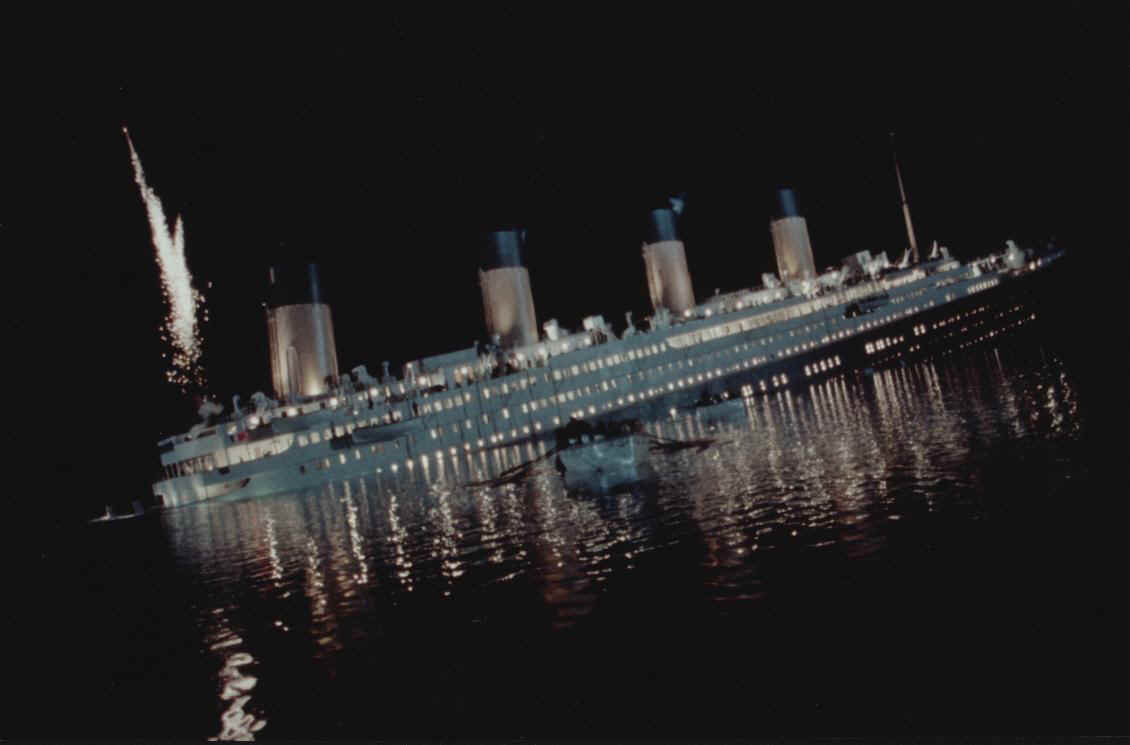
The Titanic sank early in the morning on this day in 1912 after hitting an iceberg in the North Atlantic Ocean while steaming from Southampton England to New York City. 1517 people were lost; the Titanic carried a lifeboat capacity of less than half of its total 2223 persons on board. Only 706 people, 31.8% of the total, survived. Titanic was the most modern and luxurious ship built at the time, and was thought to be unsinkable.
And of course, April 15th is tax day. OK, I won't go there.
*
No, I'm not superstitious, and I remain full of hope even on this dark day.
Speaking of taxes, though, I will say this. I deeply resent this new "class warfare" that was so evident in Obama's speech on Wednesday about "The Rich" paying their "fair share" of taxes to diminish the deficit. (They already pay an amazing proportion, while many pay none). "The Rich" are not evil. For the most part, they have worked hard from moderate means to get where they are. Their activity fuels the economic engine in this country, both by the companies they own that produce jobs, and the goods and services they purchase that produce jobs.
We are ALL Americans, are we not? Even the Rich? I am so grateful to be in this country, where I and my children can aspire to be in this heady class. I hope these opportunities continue.
There are three stories that are considered classics, and yet have always irritated me. Watching one of them this weekend, I think I understand why, and there's a lesson in them for improving one's writing. Here they are:
1. Tchaikovsky's ballet: The Nutcracker. Yes, I know this is a ballet and one goes for the dancing not the story, but I can't help being a curmudgeon. Very quickly, at a Christmas party Clara is given a nutcracker that her brother promptly breaks. After midnight Clara dreams she sees the mouse king and Nutcracker fighting -- through her heroic slipper-throwing she dispatches the mouse king and breaks the spell on her beloved Nutcracker, who is really a handsome prince (of course). The prince takes her to the Kingdom of the Sweets where he and Clara hold court over all the dancing subjects in the kingdom celebrating the prince's return and Clara's bravery. The End.
2. Alice in Wonderland (Disney's movie, 1951). Yes, I know Lewis Carroll wrote this novel as a veiled political commentary of Britain in 1865, but Disney’s movie makes no sense. I hated it even as a kid. Alice is bored, then sees a white rabbit with a watch and the nonsense begins. I basically learned from this movie not to eat or drink strange things lying around: Alice shrinks or grows tall, talks to disappearing cats, attends bizarre tea parties, rumbles with the Queen of Hearts ("Off with her head!") and basically has a confusing time of it before waking and realizing it was all a dream. The End.
3. The Wizard of Oz (Fleming's 1939 movie). Yes, I know this extravaganza broke a lot of ground, including the use of Technicolor and Judy Garland's song “Over the Rainbow,” had a fabulous set and cast of many, won many awards, and is considered a classic, but what can I say? I don’t like it. Dorothy on her way home from rescuing her dog is caught up in a tornado and dropped in the land of Oz. She's chased by the Wicked Witch of the West (love Margaret Hamilton), wears ruby slippers, and wanders through the country picking up assorted companions as she goes to find the Wizard of Oz so he can send her home. I'm still trying to figure out Dorothy’s line at the end that goes something like, "I learned that when I go looking for my heart's desire, I don't have to go farther than my own backyard, because if it isn't there, I never lost it in the first place." Huh?? The End.
Does anyone see what the common problem in these stories might be? Anyone? Anyone?
I think the reason these stories don't work well as stories is because they don't have a point. In all three, the main character goes on a journey, but comes back exactly the same as before. Well, Dorothy in Oz DOES have a character arc, but it's a trivial one: She basically learns that it's good to be home. This is like saying that the grass is green. Do I CARE about what happens to Clara, Alice, or Dorothy? Not really.
So, in light of this, how might one make a story gripping? How might one cause the reader or viewer to identify with the protagonist?
Answer: There must be an element within the protagonist with which your reader or viewer identifies. By this I'm not talking about statistical data (white male, 30s, lives in Chicago, day trader), but rather, what the protagonist desires in the story, the point through which the character arc traverses.
Let's do another example: Rocky, a classic film that I love love love! But wait a moment. I detest boxing; I can't stand the violence, crowds, yelling, smoke, blood, etc. I'm not an Italian man. I don't live in Philadelphia. I don't go to bars, or have friends who trash their houses with a baseball bat when they're angry. I don't punch raw meat. I do love dogs, so I could see myself running with Rocky’s Boxer, Budkins, but that's about it. Oh, and the music is great.
But surely this isn't enough to keep me watching. What I love about this movie is Rocky's determination to make something of himself: he doesn't want to be "just another bum from the neighborhood." Gee, I can definitely identify with this. I know that this is a hard thing to accomplish. I watch Rocky's heartbreaking struggle: he's pushed down at every turn, but somehow through a lucky break and some very hard work, he's able to claw himself up to prominence. He doesn't even win the final fight, but he knows that he has indeed become a Somebody through hard work and determination because he was able to “go the distance” with Apollo Creed.
Rocky's character arc parallels the course of triumph that I wish for my own life. He fights; I fight. He's knocked down; I'm knocked down. He makes progress; well, maybe I can make progress too. There's some hope.
The reader or viewer must care about your protagonist. To do this, there must be a deep abiding drive in your protagonist that your reader or viewer can identify with, and root for, and hope to see victorious. If your hero can do it, the reader or viewer thinks, then maybe so can I.
*
NOTE: this entry is reposted. A perceptive commenter remarked that all three of the stories I named (The Nutcracker, Alice in Wonderland, The Wizard of Oz) were written in the 1800s or early 1900s, when fantasy types of stories were just beginning to emerge. She suggested that the story world in these stories was sufficiently entertaining for an audience not as sophisticated in terms of story type and development as we are today with mega-special effects and mind-twisting story worlds. Brilliant point, Gwen!